
 RSS Feed
Categories
- Antarctic (192)
- Articles About RYM (13)
- Delivery stories (32)
- Life stories (71)
- Moutaineering – Aconcaqua, Island Peak (40)
- Personal Travel (106)
- Projects (26)
- Race Reports (150)
- Safety at Sea (19)
- South Georgia (314)
- Tips and tricks (51)
Archives
- September 2016
- February 2016
- September 2015
- February 2014
- December 2013
- November 2013
- October 2013
- June 2013
- May 2013
- April 2013
- February 2013
- January 2013
- December 2012
- November 2012
- October 2012
- September 2012
- August 2012
- July 2012
- June 2012
- May 2012
- April 2012
- March 2012
- February 2012
- January 2012
- December 2011
- November 2011
- October 2011
- September 2011
- August 2011
- July 2011
- June 2011
- May 2011
- April 2011
- March 2011
- February 2011
- January 2011
- December 2010
- November 2010
- October 2010
- September 2010
- August 2010
- July 2010
- June 2010
- May 2010
- April 2010
- March 2010
- February 2010
- January 2010
- December 2009
- November 2009
- October 2009
- September 2009
- August 2009
- July 2009
- June 2009
- May 2009
- April 2009
- March 2009
- February 2009
- January 2009
- December 2008
- November 2008
- October 2008
- September 2008
- August 2008
- July 2008
- June 2008
- May 2008
- April 2008
- March 2008
- February 2008
- January 2008
- December 2007
- November 2007
- October 2007
- September 2007
- August 2007
- July 2007
- June 2007
- May 2007
- February 2007
- January 2007
- September 2006
- August 2006
- July 2006
- June 2006
- May 2006
- March 2006
- June 2005
- May 2005
- February 2005
- January 2005
- December 2004
- June 2004
- September 2003
- August 2003
- June 2003
- October 2002
- March 2002
- February 2002
- September 2001
- August 2001
- April 2001
- August 2000
- July 2000
- November 1998
- July 1998
- June 1998
- August 1996
- 0
Pacific Cup 2016
Ashley raced aboard a J124 Albion to Hawaii in the 2016 Pacific Cup as watch captain/helm. Unfortunately 450 miles from the finish structural failure of the chainplate bulkhead occurred and we had to drop sails. Turn the boom into a mast and use the trysail as a mainsail. We then were able to pick up fuel from a cruising boat doing the race and continue under power to the finish.
Here is our Pac Cup in a video by Angel our Mother Hubbard onboard who looked after the galley. He truly turned into an asset after only sailing for three years and not having been offshore for more than a day.
Comments Off on Pacific Cup 2016
Over a decade ago! Video of Atlantic Race in 2005
Over a decade ago I raced with the Hubbards for the first time on a boat they chartered called Tempest. Stephan Lirakis was one of the watch leaders and sent me this video link for you tube . We won our class and were winning the entire race until we got to the English channel and there was no wind. The race these days finishes off the Lizard rather than off the Needles for this very reason.
Comments Off on Over a decade ago! Video of Atlantic Race in 2005
First Race in over 50 years SORC Miami to Havana
The skipper of Dragon the Class 40 I raced on wrote the following report http://sailinganarchy.com/2016/02/18/cuentos-de-dragones/
Merf the designer of Dragon wrote the following release http://www.owenclarkedesign.com/Class_40_Dragon_wins_inaugural_Miami-Havana_Race
And Sailing Anarchy did an interview with Mike at the finish. https://www.facebook.com/SailingAnarchy/videos/10156478555940375/?pnref=story
So I don’t think I need to write anymore 🙂 It was awesome fun and I enjoyed getting the top boat speed of 16.7 knots. She is a beautiful boat to handle offshore in big waves and breeze.
Comments Off on First Race in over 50 years SORC Miami to Havana
Truth is on the move
RYM was hired by the new owner of Open 50 Truth to break down the boat and organize the logistics to ship her from San Francisco to Hamble, UK see http://www.owenclarkedesign.com/famous-owen-clarke-open-50-returns-to-race-in-the-
Comments Off on Truth is on the move
Zac’s trip to Antarctica
I promise I will post something soon about the trip to Antarctica this northern winter southern summer. In the meantime read Zac’s take on the trip!
Comments Off on Zac’s trip to Antarctica
A whirlwind trip
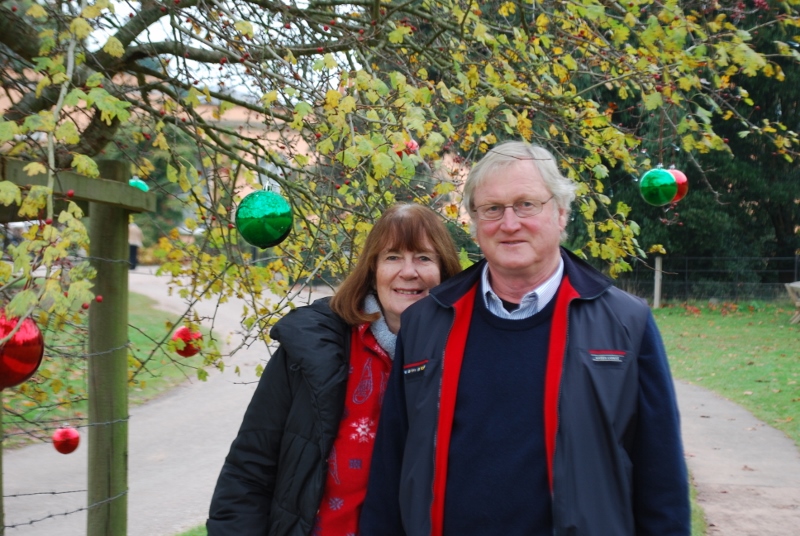
 I took 2 weeks off from the boat in Chile and went home to England to see my parents we did lots of Christmassy activities and put up a fake Christmas tree.
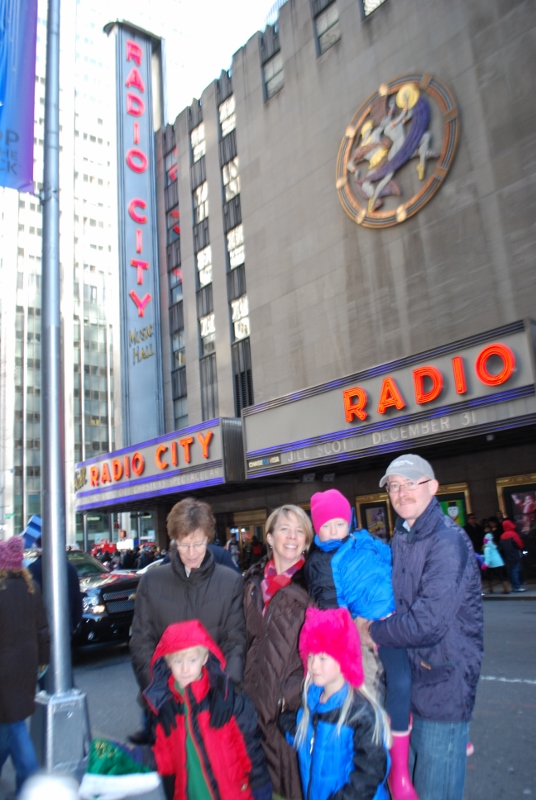
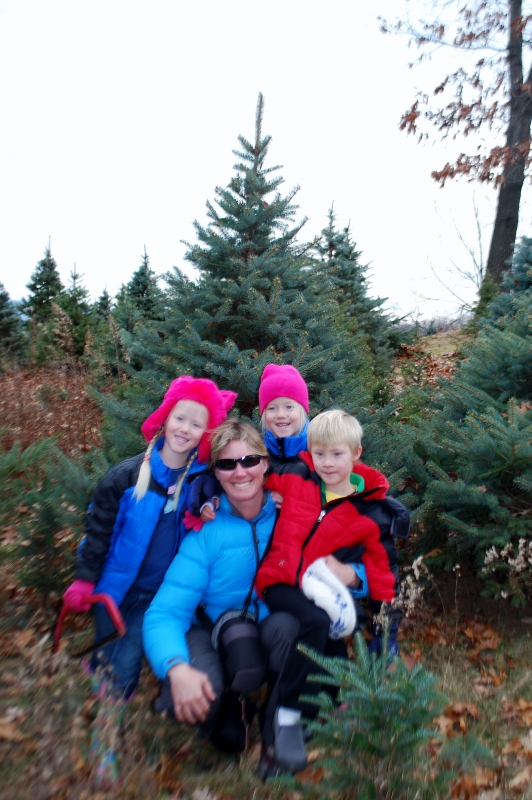
Next stop was New Jersey to see my brothers family for Thanksgiving where we cut down a real Christmas tree from a farm and went to see the Christmas Spectacular at the Radio City Music Hall in New York City. It is cold in New Jersey so they are making use of the synthetic down jackets I got them in Nepal last year.
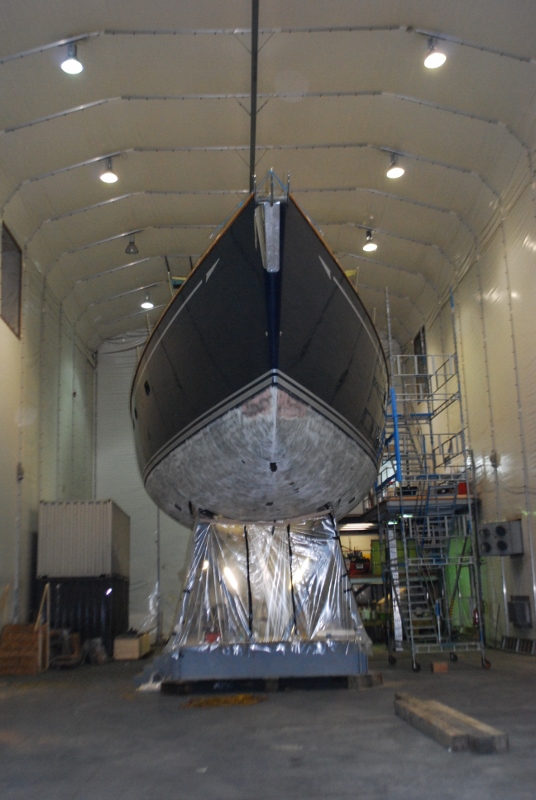
Then back to the UK for work on the 82 footer that is being rebuilt at Oyster in Southampton, early Christmas with the Whytes and Perrins and work on my 30 footer Santana that I own with my brother.
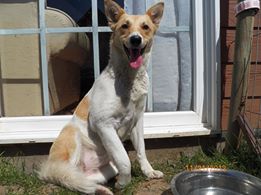
During my time away we (my brother’s family and myself) decided to adopt a dog from Puerto Montt who had been hit by a truck in the Marina just before I left. So I have been in full investigation mode and organizing Pincoya’s paperwork and transport.
The trip back from UK was a nightmare and involved a few hours in a hotel room in Madrid (if you could call it a hotel!) and a few hours in a hotel room in Santiago. It should have taken 24 hours and instead it took 48 hours. Zac was at the airport waiting to board the flight I got off of and told me where the car was. I got back to the boat mid morning and just started working as I was in that mode. When I finally got to sleep on Monday night I had slept around 9 hours since waking up Friday morning in Cowes Isle of Wight!
Comments Off on A whirlwind trip
Try out please?
Thank you so much to everyone who got involved with this video I was blown away by your comments and everyones support. And Sam you are a genius and very much deserve a position on the Volvo as an onboard reporter.
River Rafting down the Petrohue River
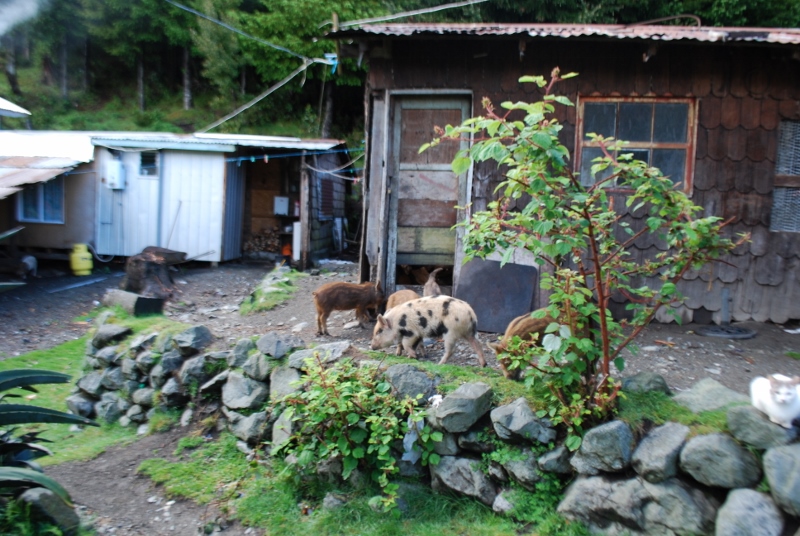
I left the boat at 5pm on Friday night and drove to Lago San Todas just up the road from Ensenada. It was raining and getting dark when I arrived on the shore of the lake and luckily there was a single boatman looking for his last fare to the other side of the river. I had called ahead to a farmhouse that was listed in Lonely Planet (though without a phone number but Google solved that) and in very bad Spanish I asked if there was a room available. The room was rustic (chipboard walls) but there was a lovely fire going and the old lady using mime put dinner in front of me. There were piglets running around in the yard along with the usual cats, dogs, roosters, chickens etc.
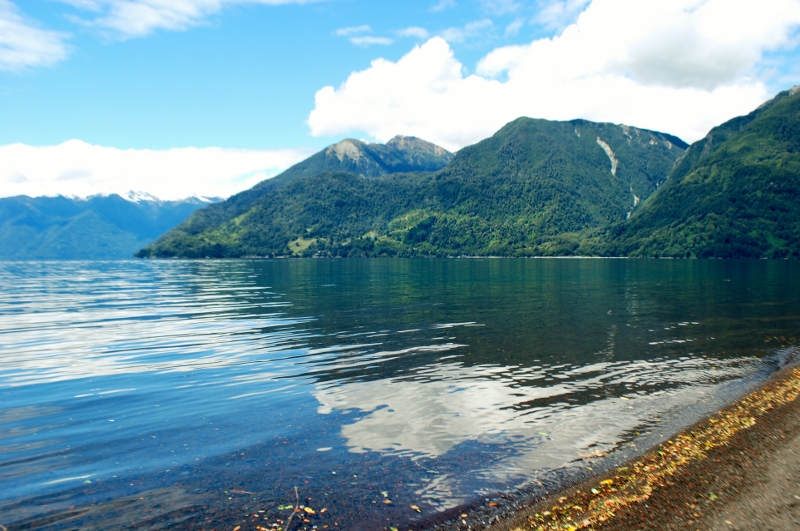 Saturday morning I woke up to a beautiful view of the lake surrounded by mountains and went to the CONAF to log in a walk which took me 4 hours through the forest and then alongside the lake.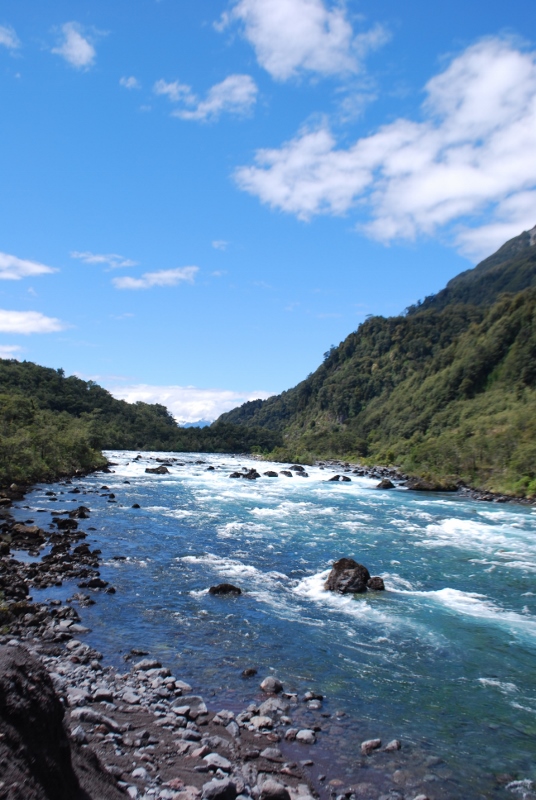
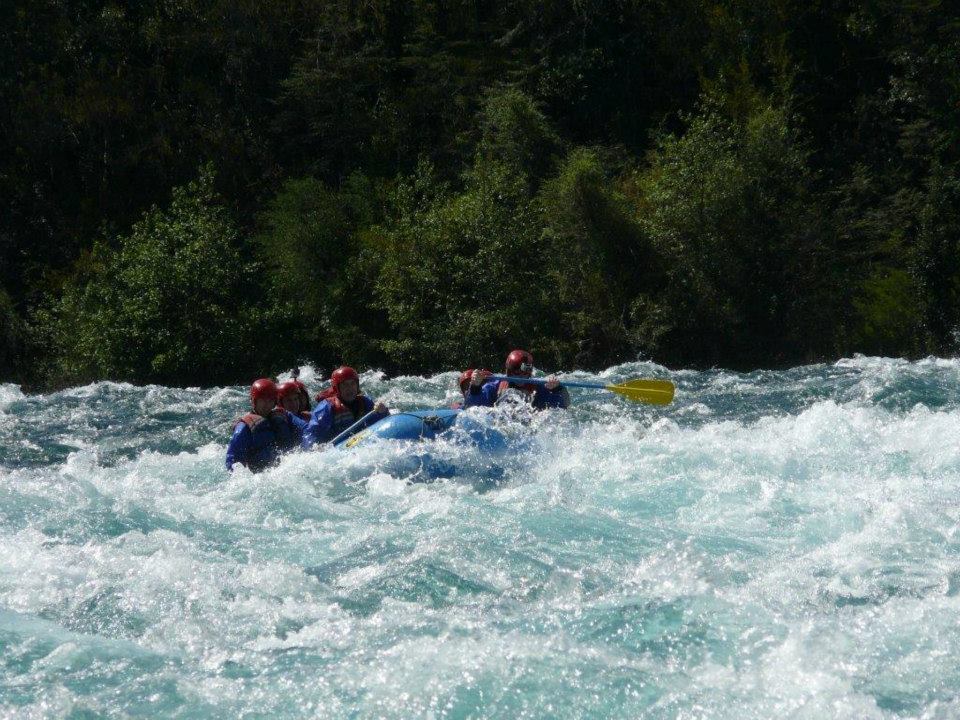
I called the rafting company to see if they had room for one. Quickly jumping in my car I managed to join in with a group of 5 guys from Santiago. It was interesting trying to respond to Spanish commands from the guide. Had a great time and even went down a rapid outside the raft when they said we could jump in if we wanted!
Back in Puerto Montt by 6pm and in time to watch a soccer game at the stadium across from the boat. Quite a fun filled Saturday off and Sunday is a work day but as the weather was not nice I didn’t mind so much!
Comments Off on River Rafting down the Petrohue River
Volcano Osorno
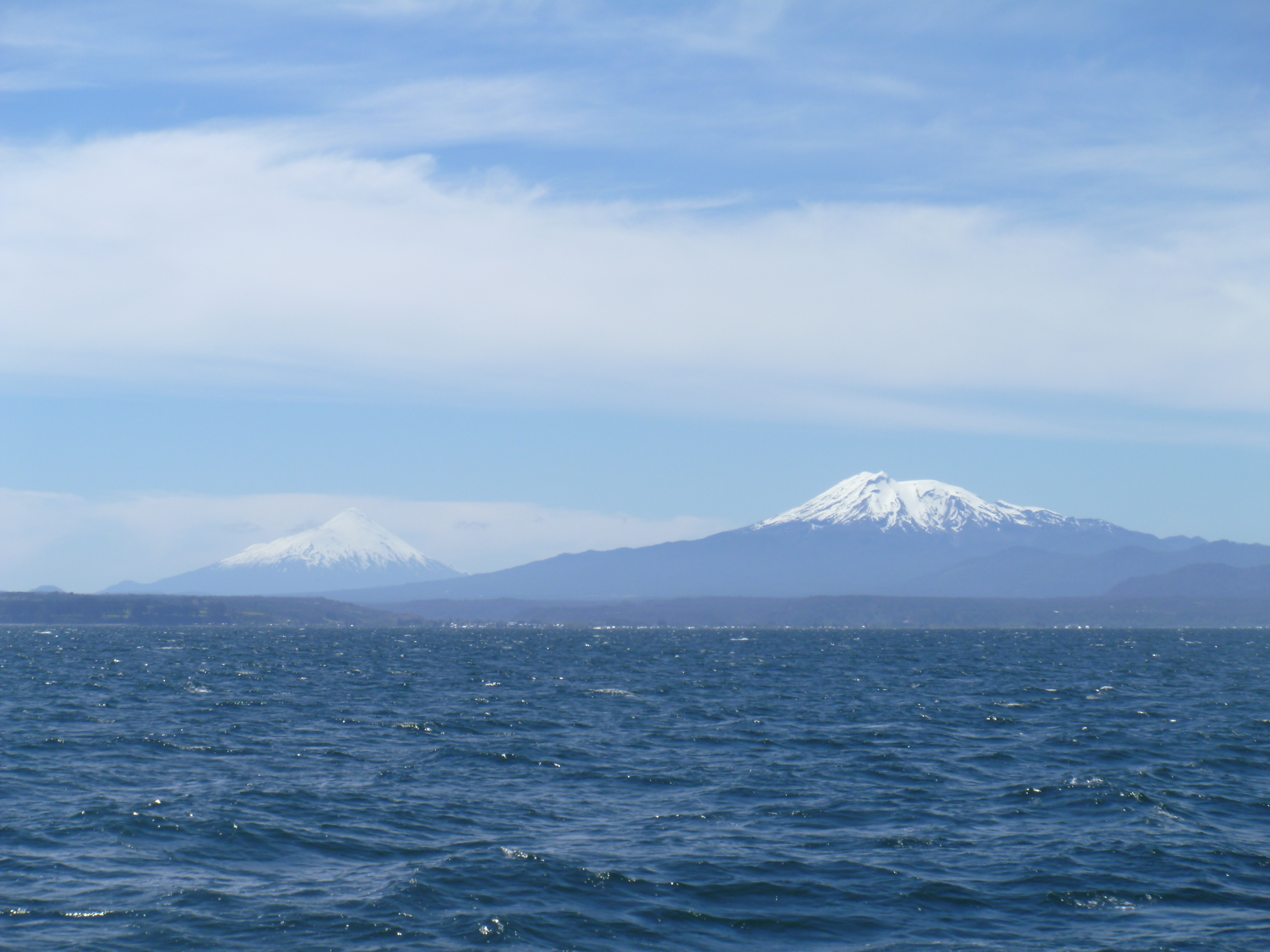
The first thing you see when you arrive by sea into Puerto Montt is snow covered Volcanoes all around. So being a climber it was necessary to climb one especially as it is topped by a glacier. The closest to Puerto Montt is Volcanoe Osorno in the Los Lagos region it is 2,652 meters high and perfectly conical.
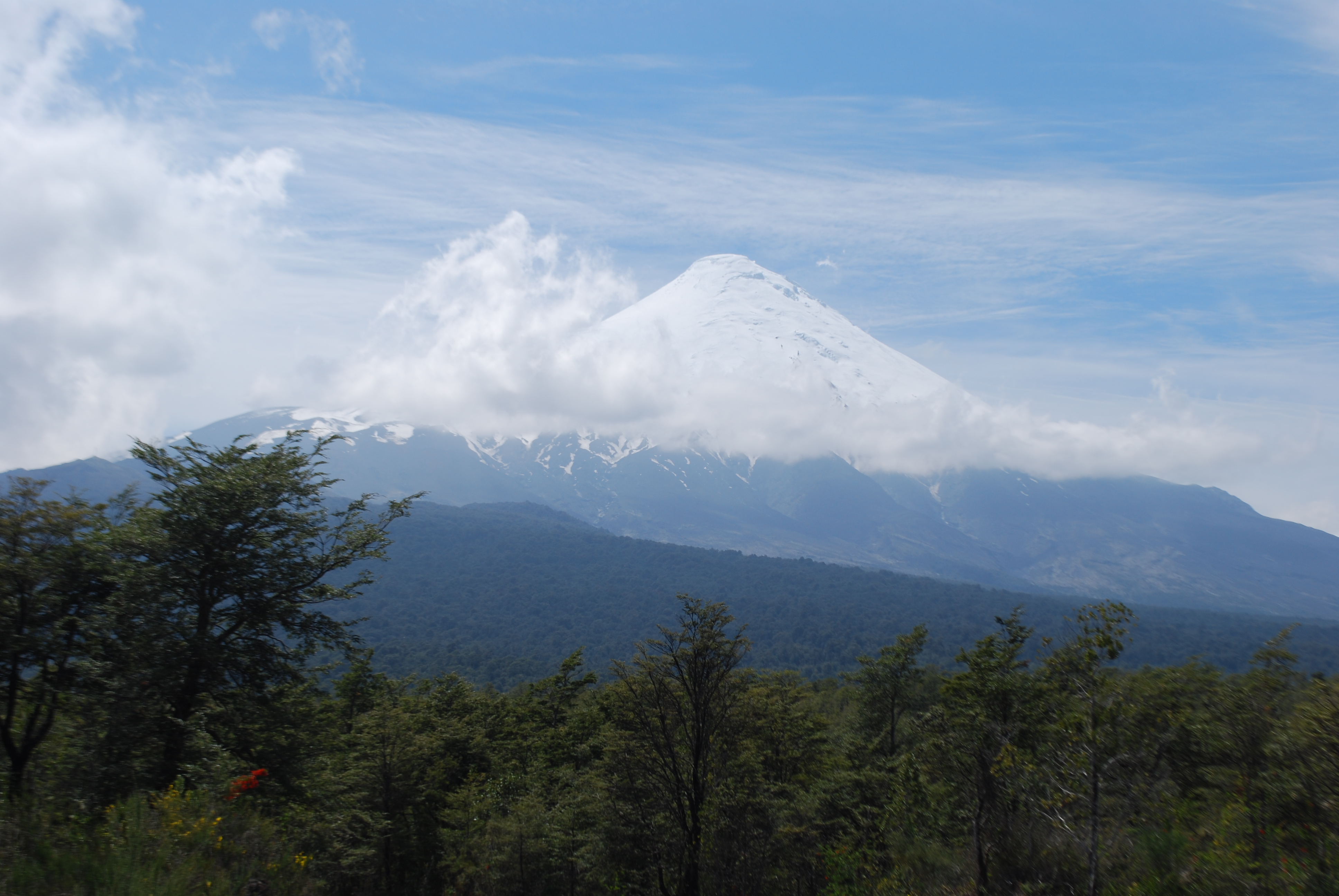
Osorno is on the shore of Llanquihue Lake and Todos Los Santos Lake. It is considered to be very active with 11 eruptions between 1575 and 1869. The conical shape reminds me of Mount Fuji which I went to as a little girl when I was either 7 or 8.
On Friday after work I picked up some rental equipment from Ensenada as I hadn’t brought my harness, boots, ice axe, crampons and helmet.
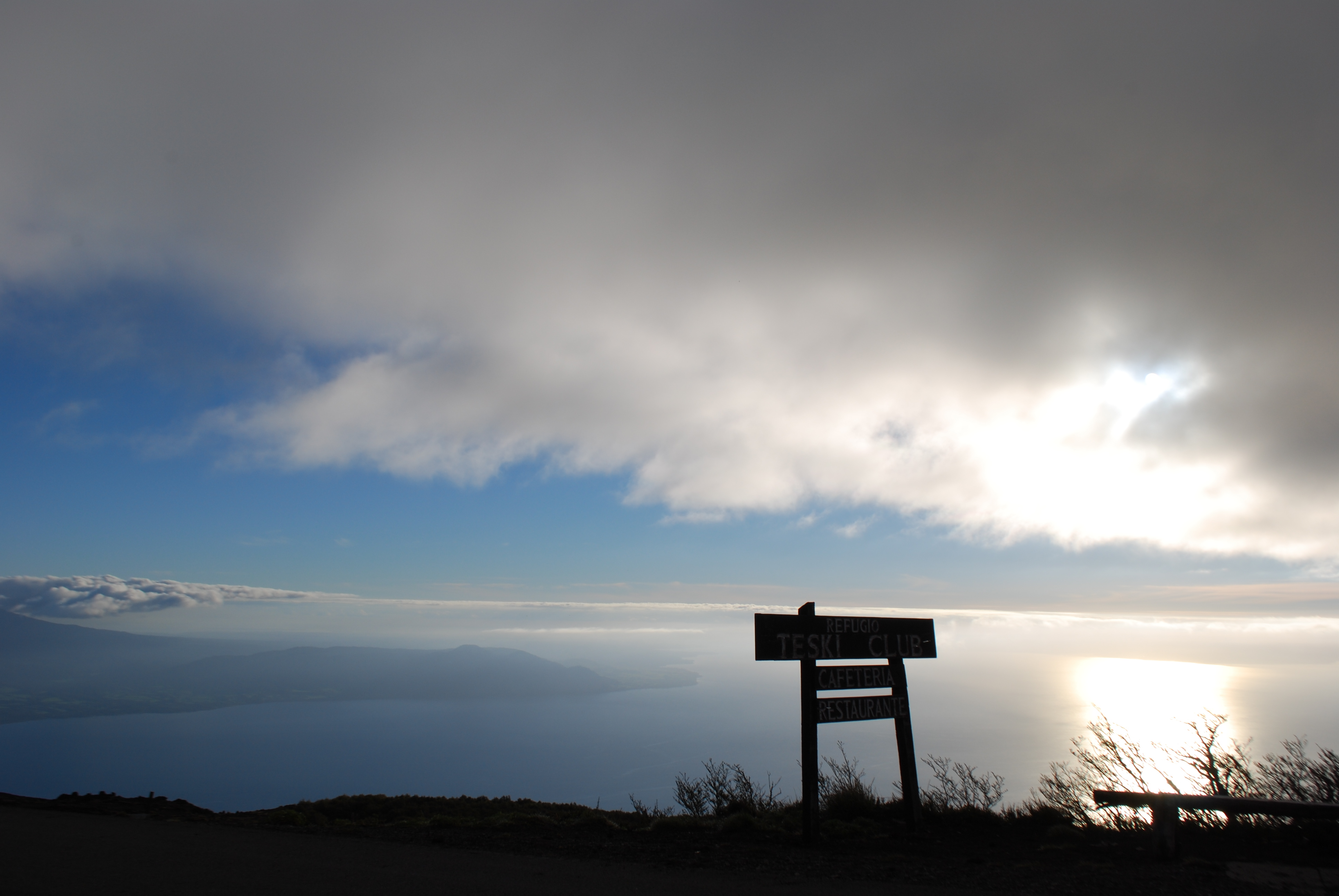
Then on up to the Teski Refugio on the side of the mountain just above the snow line at the ski resort. The view of the lake was stunning and got even better as the evening wore on.
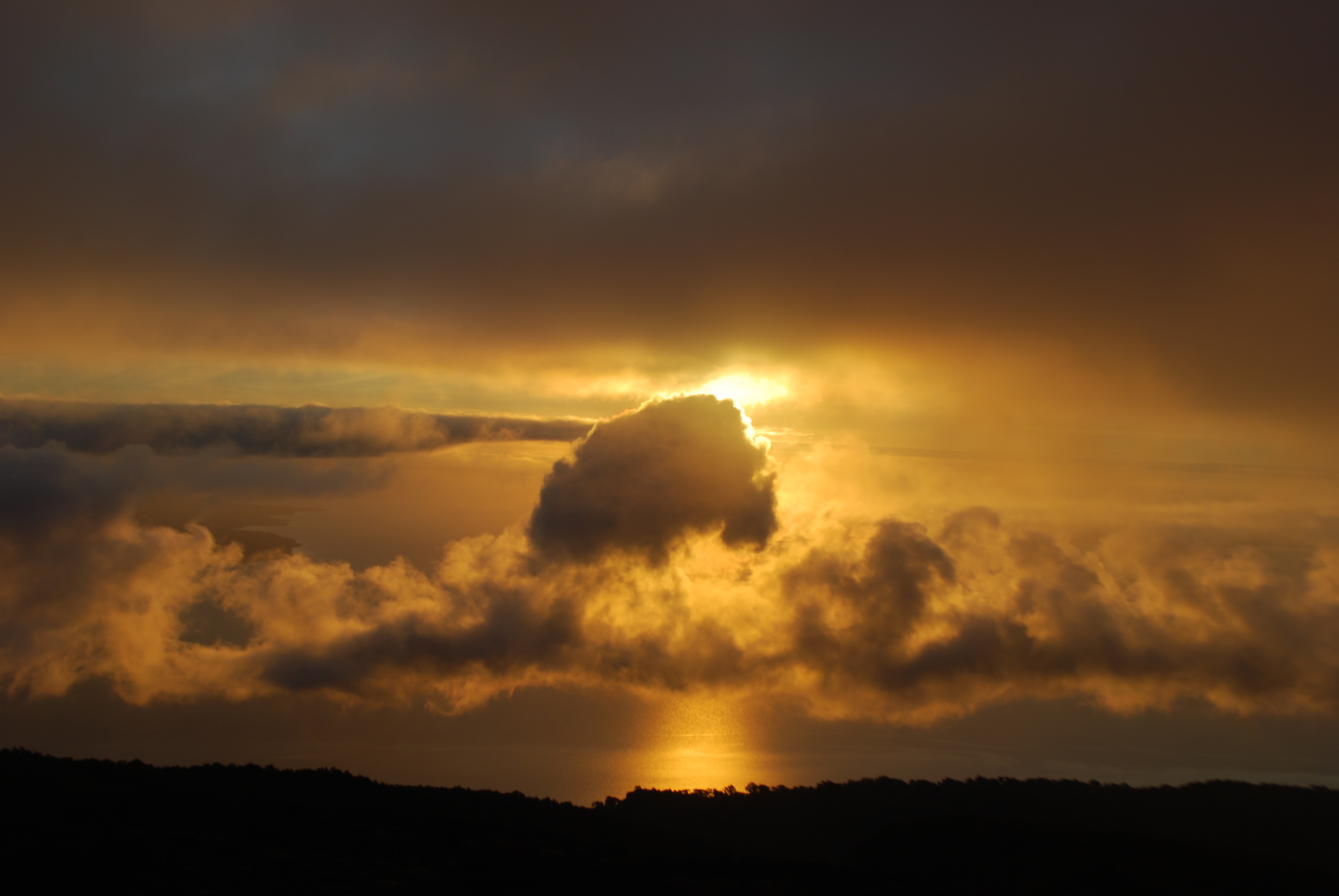
After a tasty dinner it was time for bed in our bunk room as I had to be up at 4am to head on up the mountain with my climbing partner/guide Paulo.
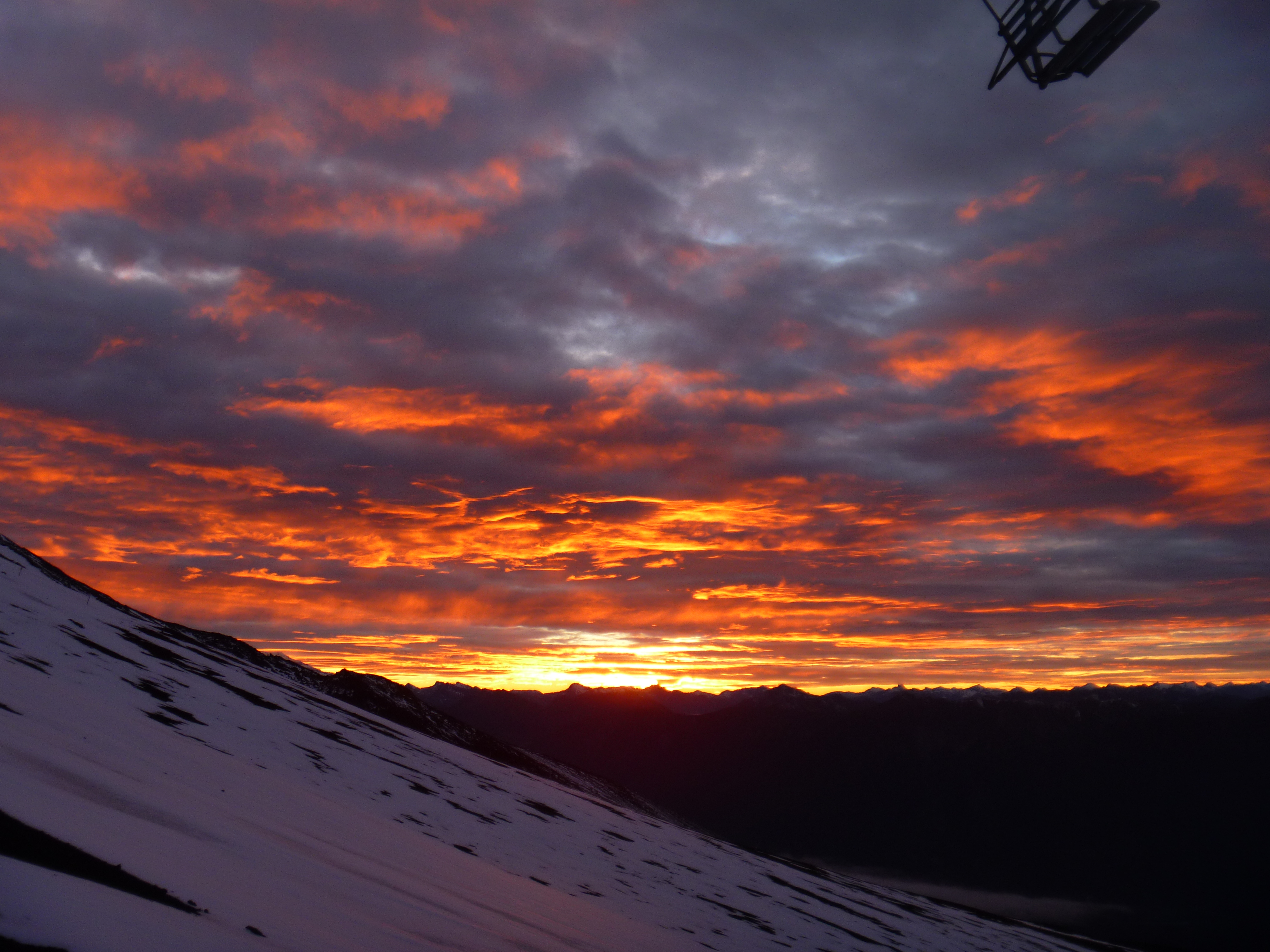
The CONAF office is 100 meters from the Refugio so at 5am you fill out the permit application and get a permit to attach to your backpack. Then head on up past the ski lift as the sun comes up lighting up the underside of the clouds which you are soon above.
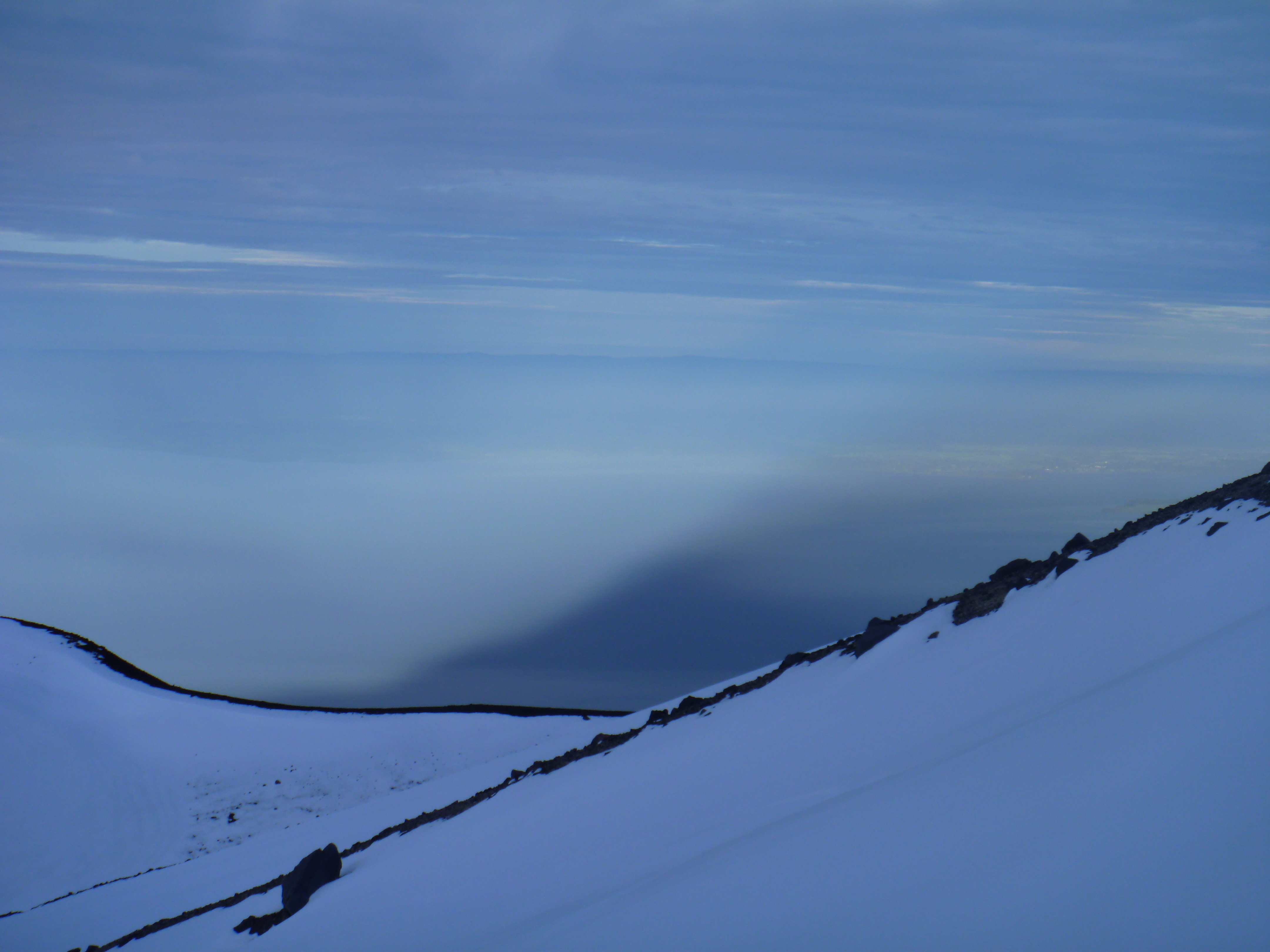 The shadow of the volcanoe can be seen in the clouds.
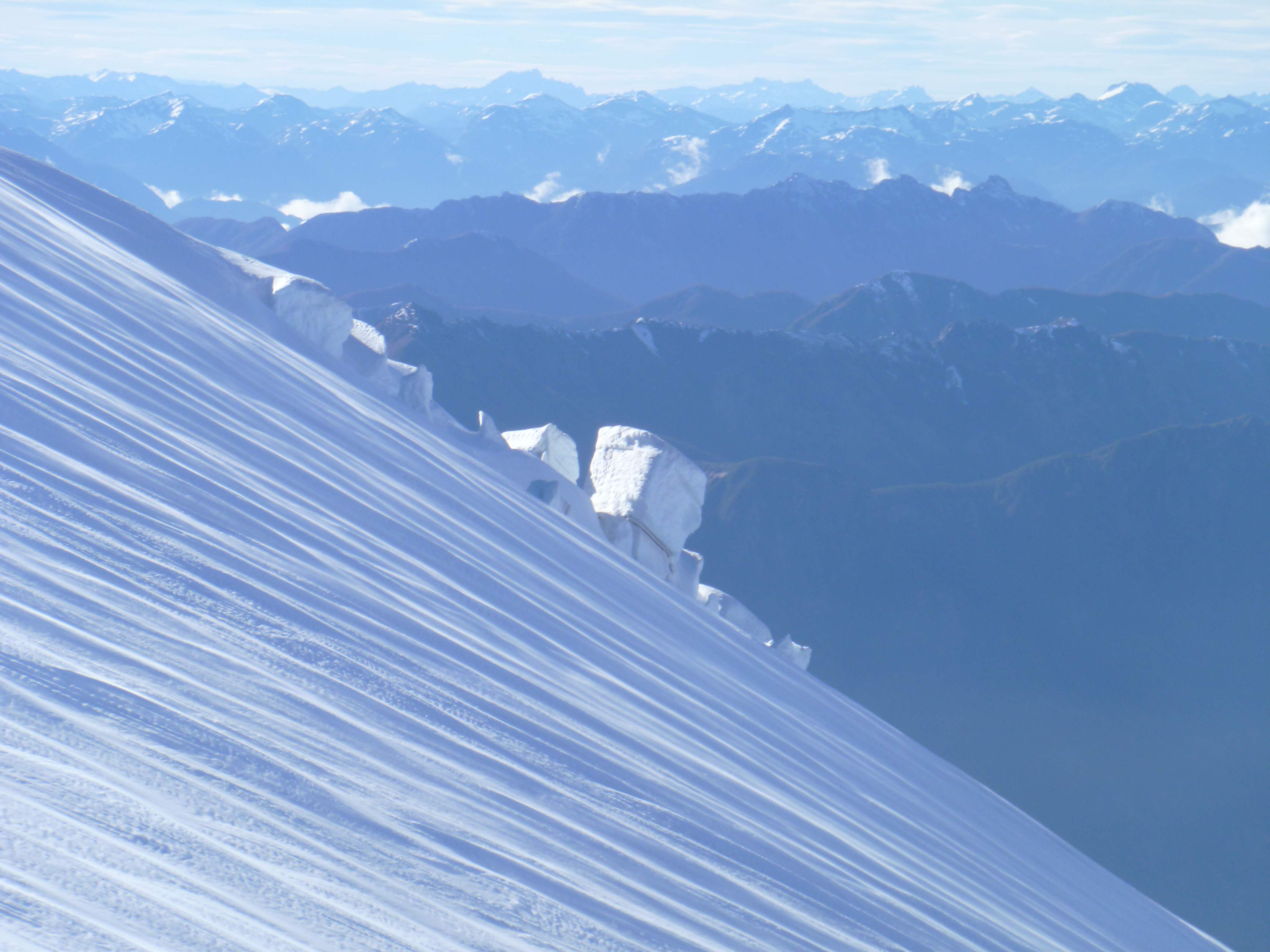 We put on our crampons and continued up to one side of the heavily crevassed area of the slope. The mountains of Patagonia spread as far as we could see ranks and ranks of them on all horizons.
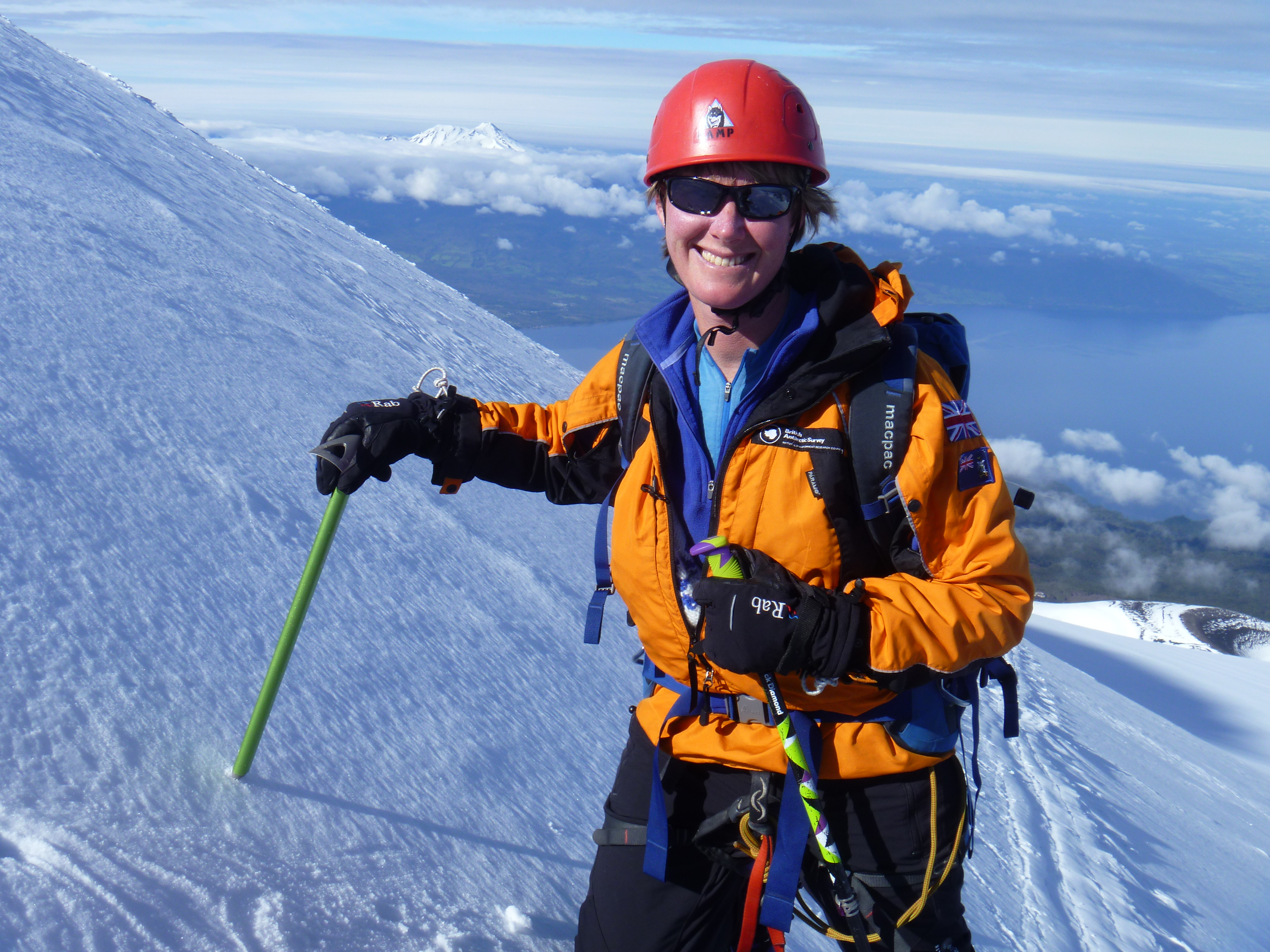 As it gets steeper time for ice axe and then roping up.
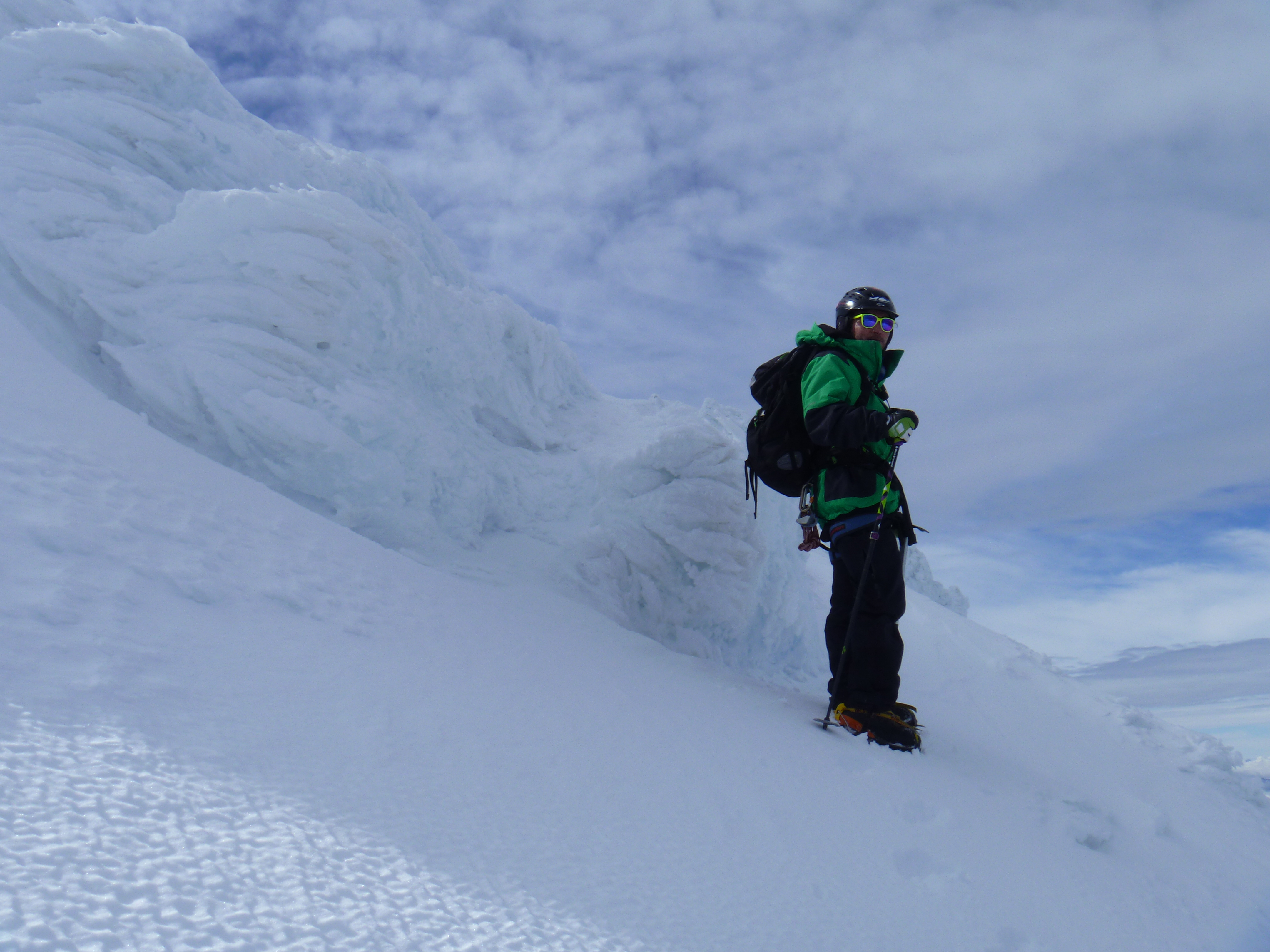
The ice features were incredible all swirly shaped from the wind.
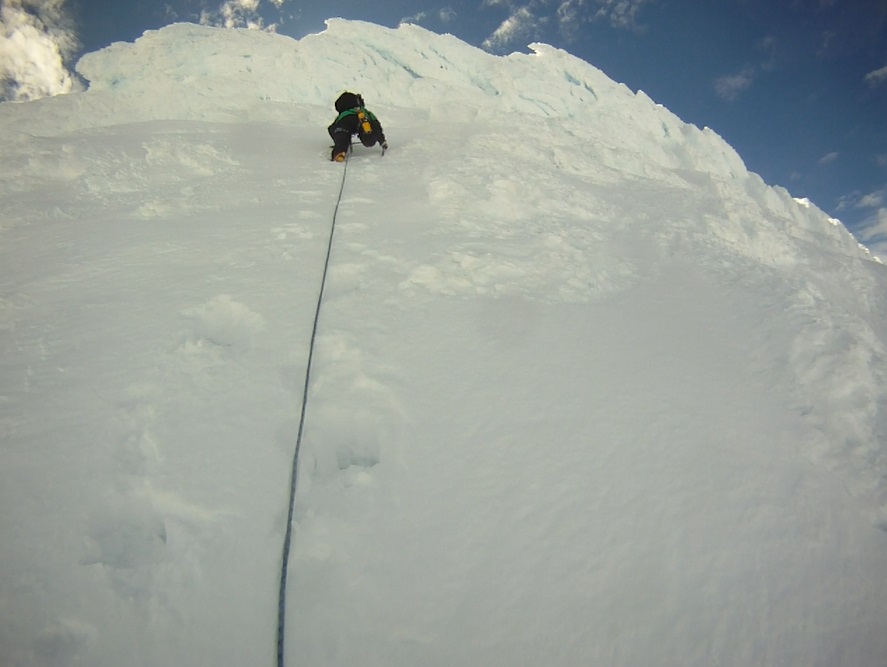 It was very icy and we really needed an ice axe and hammer preferably a technical set as it became steep. But we made do with an ice axe each and had to cut steps.
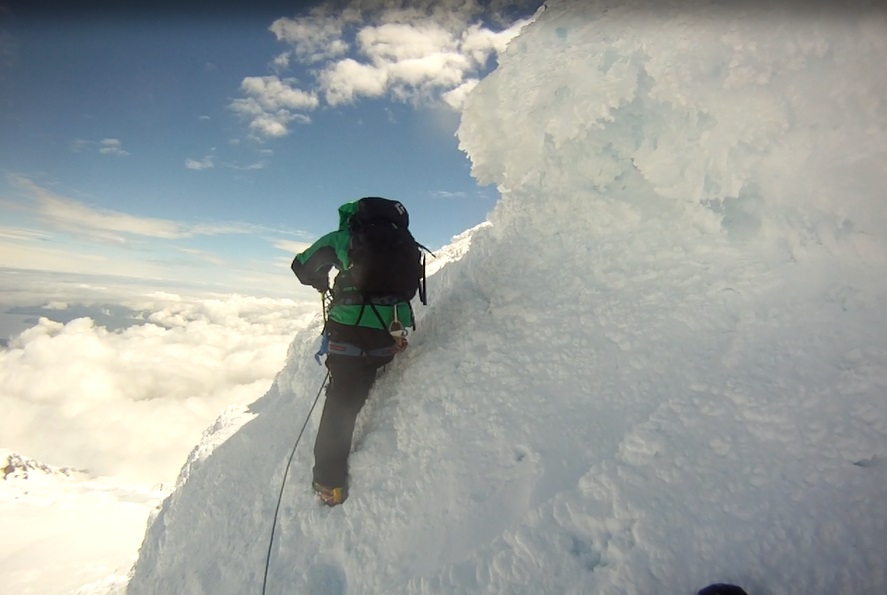
To get onto the summit it is necessary to climb under the cornice which is very stable along a very exposed shelf.
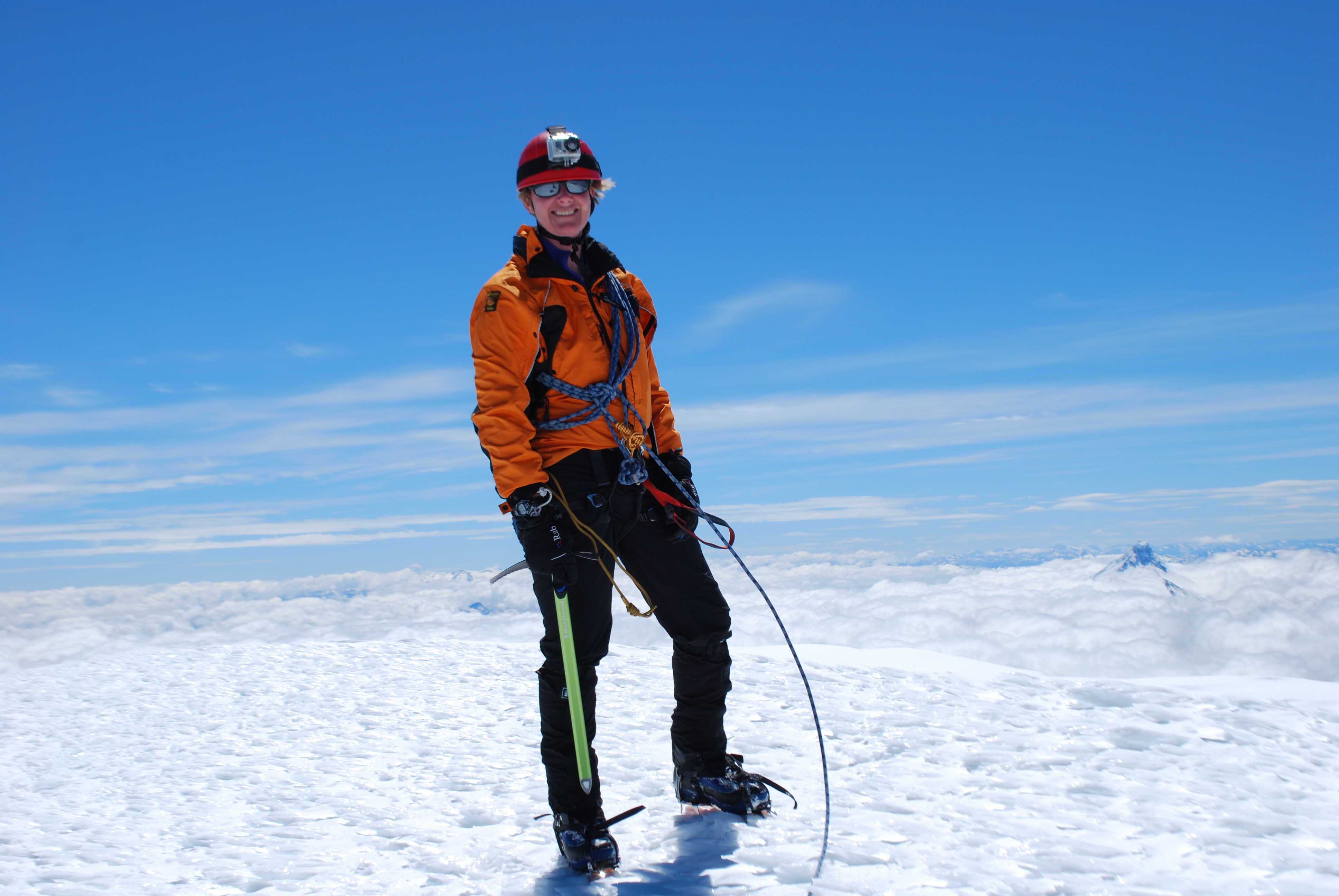
The summit was spectacular it is a large flat platform that was windy and cold. We were the first up to the top after a bit of an ice climb! Other volcanoe summits popped out above the clouds.
Total return trip was 10 hours. It was hard work getting down hill as the snow got soft in the hot sun above the clouds.
Comments Off on Volcano Osorno